

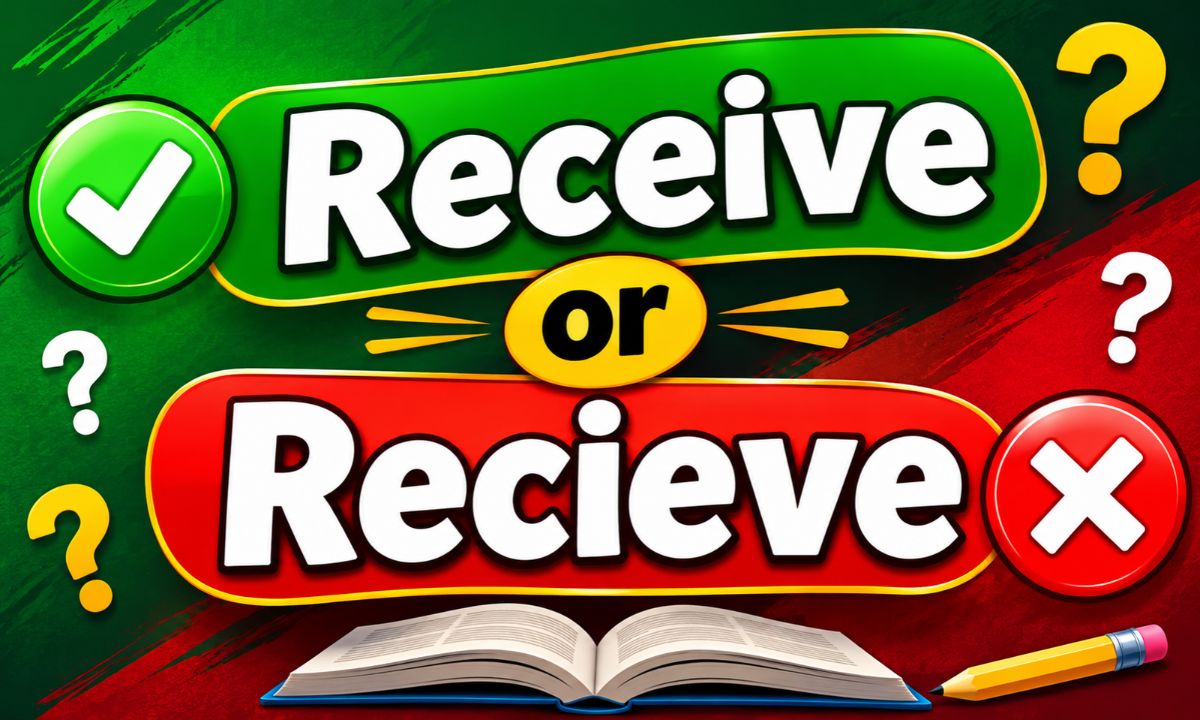
You’re halfway through an important email when your fingers stall. Is it receive or recieve? That tiny doubt can make even confident writers second guess themselves, especially in professional emails or academic essays. The correct spelling of receive is R-E-C-E-I-V-E, with EI after C. Recieve is a misspelled word that no dictionary accepts.
This guide breaks down the receive spelling rule, the receive meaning, and the Latin recipere roots behind it. You’ll also get memory tricks, receive examples in sentences, and a quick look at British English versus American English. Stick around, and you’ll never need to hit the spell-checker for this word again. Each section keeps things simple, so you can learn the rule once and use it everywhere.
Receive or Recieve: Quick Answer
Receive is the correct spelling. The letters run R-E-C-E-I-V-E, with EI after C.
Recieve is the incorrect spelling. It swaps the vowel order and breaks the spelling pattern English expects after the letter C.
Need the short version for a quick fix? Use receive, received, receiving, and receiver. Every one of those keeps ei right behind the C.
What Does Receive Mean?
To receive something is to get it, take it in, or have it handed to you. It’s a transitive verb, so it needs an object, like a gift, a call, or a piece of news.
The word covers physical things and abstract ones. You can receive a package, receive feedback, or receive a signal on your radio.
Receive or Recieve Meaning
Here’s a fun twist. Only one half of receive or recieve has a meaning.
Receive means to get or accept something sent or given. Recieve means nothing, because it’s just a slip.
A spell-checker will flag it with a red squiggle every time. That squiggle is your cue to fix the misspelled word, not argue with it.
Read More: Reinforce vs Reenforce: Meaning, Spelling and Examples
You Receive Meaning
When you write “you receive,” you’re talking about the person on the getting end. Maybe you receive an email from your boss, or you receive exam results on a nervous Friday.
Think of it as a simple handoff. Someone gives, and you receive.
The phrase shows up constantly in professional emails, job offers, and order updates. “You will receive a confirmation shortly” is one you’ve probably read this week.
Receive vs Recieve: Which Spelling Is Correct?
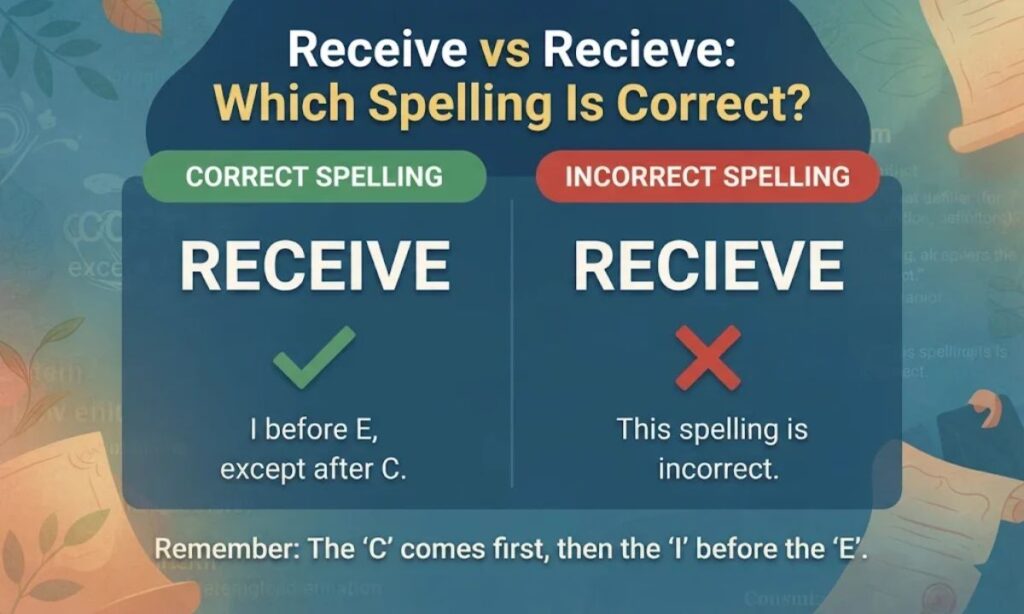
Short answer: only one passes. But it helps to see both side by side, so the mistake becomes easy to spot.
Let’s look at each spelling on its own.
Receive
Receive is the standard spelling in every English dictionary, from Oxford to Merriam-Webster. It works in formal writing, academic essays, texts, and tweets.
The correct use of receive follows one pattern. The C is followed by ei, never ie.
Once you lock that in, the whole receive word family falls into line. Received, receives, receiving, and receiver all share the same core.
Recieve
Recieve is what you get when the brain sneaks in the more common IE spelling. Most English words like believe and field do use ie, so the slip feels natural.
But recieve breaks the rule that applies after C. No dictionary lists it as a variant, and no style guide accepts it.
If you spot recieve in a draft, treat it as a typo. Fix it and move on.
Receive Spelling Rule Explained
Most of us learned this rhyme in school. I before E, except after C.
The receive spelling rule is the “except after C” half. After a C, you flip the order and write ei, which gives you receive, ceiling, deceive, and conceive.
The rule works best when the sound is the long “ee” sound. That’s the sound you hear in receive, so the rhyme fits perfectly here.
Now for the honest part. This is one of the English spelling rules with plenty of exceptions.
Words like weird, seize, either, and neither ignore it. Science, species, and ancient also look like rule breakers, because the C in those words doesn’t make an “ee” sound.
So don’t treat the rhyme as law. Treat it as a handy shortcut that happens to nail receive.
The Origin of Receive and Recieve
The story starts with the Latin recipere, which blends re (back) and capere (to take). Literally, it meant “to take back” or “to take in.”
From there the word traveled into Old French recoivre and the Old North French receivre. Those versions are where the ei combo first appeared.
By the 1300s it landed in Middle English receiven. The spelling shifted a little over time, but that EI after C habit stuck around for good.
So where does recieve come from? Nowhere official. It’s a modern spelling confusion, not a historical variant.
Knowing the receive word origin helps in a practical way. When you see how much of the English vocabulary came through French, the odd ei starts to feel less random.
British English vs American English Spelling
Good news here. British English spelling and American English spelling match for this word.
Both write receive. Neither accepts recieve.
That’s different from pairs like color and colour, or center and centre. For receive in English, you can relax about regional spelling.
One small note on receive pronunciation. It’s said /rɪˈsiːv/, with stress on the second syllable, in both accents.
By the way, “Received Pronunciation” is also the name of a classic British accent. Same root word, totally different topic.
Read More: Hustle vs Hussle: Which Is Correct Spelling and Usage?
Receive or Recieve Grammar and Usage
Let’s tackle the grammar side of receive or recieve without the jargon. Receive is a regular verb, so the forms are easy to predict.
You add -s for third person singular, -d for the past, and -ing for the continuous form. Here’s the lineup:
- Receive (base): I receive a newsletter every Monday.
- Receives (third person): She receives dozens of emails daily.
- Received (past): We received your application yesterday.
- Receiving (present participle): He’s receiving treatment at the clinic.
Notice that the final E drops before -ing, so you write receiving, not “receiveing.” That’s another sneaky error you’ll see in the wild.
Nouns join the family too. A receiver is a person or device that gets something, and a recipient is the one on the receiving end of a gift, email, or award.
Receive or Recieve Examples in Everyday Writing
Rules are great, but sentences make them stick. Here are some receive examples in sentences for different situations.
Work and school:
- Did you receive my last email?
- Students will receive exam results by Friday.
- She was thrilled to receive a promotion after two years of hard work.
Daily life:
- I didn’t receive the package you mentioned.
- Our team will receive funding next quarter.
- Please let us know when you receive the payment.
Formal tone:
- You will receive confirmation within 24 hours.
- The committee will receive all applications before the deadline.
- We’re happy to receive visitors between nine and five.
Spot the pattern? Every single one keeps ei right after the C.
Common Mistakes with Receive
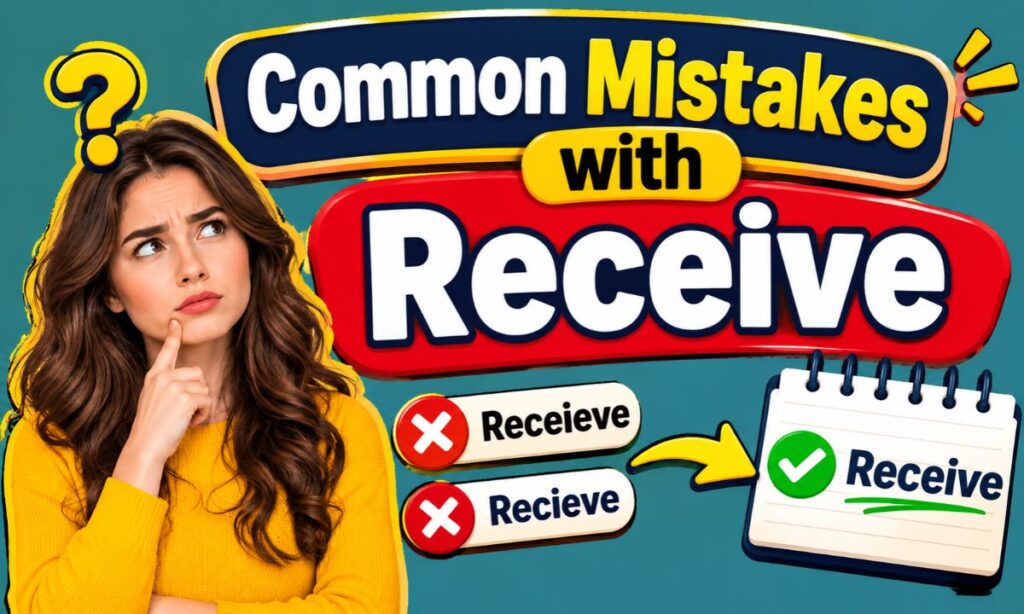
Even confident writers trip on this word. Mistakes usually show up in the other forms, not just the base verb.
Here’s where it goes wrong most often.
Received Spelling
The classic slip is recieved. It looks plausible, yet it’s wrong for the same reason recieve is wrong.
The right form is received. If you ask “is recieved the correct past tense?” the answer is a firm no.
Think of received as the base word plus d. Nothing else changes.
Receiving Spelling
People also write recieving or receiveing. Both are off.
The correct form is receiving. Drop the silent E, add -ing, and keep ei intact.
A quick check: say the word slowly, then spell each piece. Re, cei, ving.
Received Spelling Synonym
Sometimes the easiest fix is a different word. If received feels clunky, you’ve got options.
Try got, accepted, obtained, collected, acquired, or welcomed. Each one carries a slightly different shade, so pick the one that fits.
For example, “I got your message” sounds casual, while “I acknowledge receipt of your message” sounds stiff. Choose based on your audience.
Why Do People Commonly Misspell Receive?
Blame the odds. In most English words, ie appears more often than ei, so your brain defaults to it.
That’s why recieve feels right on autopilot. You’re typing fast, and the pattern in your head wins.
Sound plays a role too. The long “ee” sound doesn’t tell you which vowel comes first, because ie and ei can make the same noise.
There’s also the rhyme itself. Many people remember “I before E” and forget the “except after C” part, especially when typing under pressure.
Here’s the good news. These common spelling mistakes fade fast once you have a trick. And you’re about to get several.
Memory Tricks to Always Spell Receive Correctly
Pick the one that clicks for you. They all work.
- The rhyme: “I before E, except after C.” Since receive has a C right before the vowels, flip them to ei.
- The CEI trick: Remember that C is followed by EI. Say “cei” like a tiny code word.
- The word-in-a-word trick: Spot “ceive” and notice it holds “eiv.” Link the two in your head.
- The finger trick: Type the word slowly five times in a row. Muscle memory often beats memorization.
- The family trick: Learn deceive, conceive, and perceive together. They all share the same ending, so one lesson covers four words.
Want a spelling rhyme you can chant? Try this: “After C, E leads the way, so receive keeps I at bay.”
Silly? Sure. Does it work? Absolutely.
What Is the Difference Between Receive and Accept?
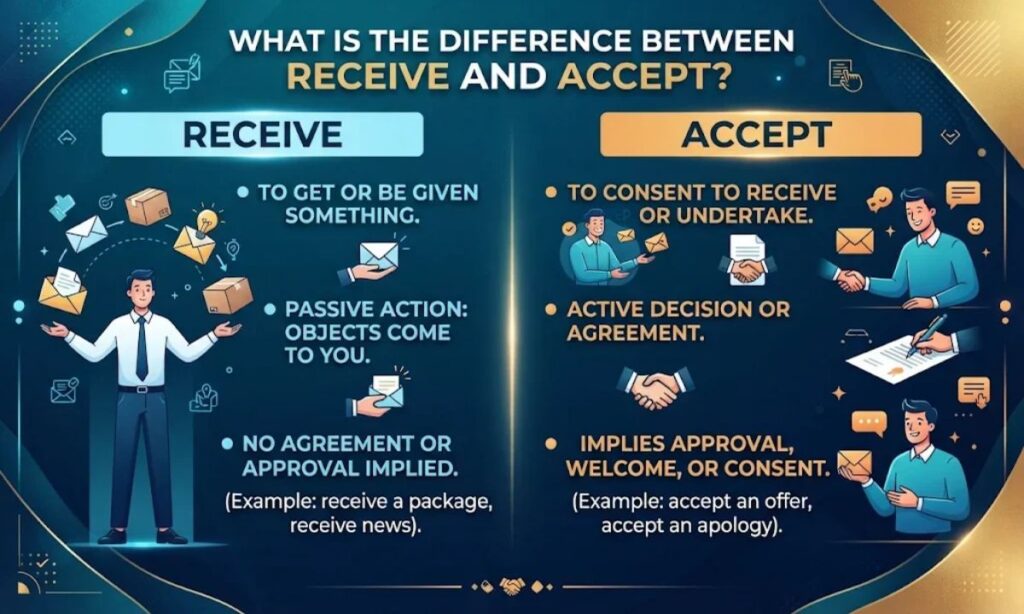
People mix these two up constantly, even though they aren’t spelling twins. The confusion is about meaning, not letters.
To receive something is simply to get it. To accept something is to agree to take it.
Here’s a real example. You can receive an invitation without saying yes, but you only accept it when you RSVP.
Same with gifts. A courier hands you a box, and you receive it. You open it and keep it, and now you’ve accepted the gift.
One more way to see it: receiving is passive, and accepting is a choice. Use that and you’ll rarely mix them up.
Receive or Recieve: Comparison Table
Here’s a quick scan of receive vs recieve and the forms around it.
| Word Form | Correct Spelling | Common Mistake |
| Base verb | Receive | Recieve |
| Past tense | Received | Recieved |
| Present participle | Receiving | Recieving, Receiveing |
| Third person | Receives | Recieves |
| Person or device | Receiver | Reciever |
| Document of payment | Receipt | Reciept |
Notice something? Every correct form keeps EI after C. That’s your entire cheat sheet in one table.
Receive or Recieve on Reddit
Spelling questions pop up on writing, grammar, and language forums all the time, and this one is a favorite. Browse subreddits about English learning or grammar, and you’ll find people asking the exact receive or recieve question.
The conversation usually follows a pattern. Someone asks about the rule, a few people share the rhyme, and others list exceptions like weird and seize.
What’s useful about these threads is the honesty. Plenty of native speakers admit they still double check receive before hitting send.
So if the word trips you up, you’re in good company. Just don’t rely on one random comment as your source, and confirm the answer in a reliable dictionary.
Receive: Google Trends and Usage Data
I won’t make up numbers here, so here’s what you can check yourself. Open Google Trends, type in “receive” and “recieve,” and compare the two lines.
You’ll typically see the correct spelling dominate, while the misspelling hangs around as a smaller, steady stream. That tells you people keep searching for help, even though they’ve heard the word thousands of times.
Search spikes often line up with school terms, exam seasons, and job application periods. People write more formal emails and essays then, so the spell-checker gets a workout.
It’s also worth trying a grammar tool to see how often it flags the word in your own drafts. Tracking your own slips beats guessing.
Receipt, Reception, Recipient: The Word Family

Once you know receive, a whole receive word family opens up. These cousins share the same Latin roots.
Receipt is proof that you got something, and it has that sneaky silent P. Reception can mean a welcome desk, a party, or how a signal comes through your phone.
A recipient is the person who gets something. Then there’s receptive, which describes someone open to new ideas, and unreceived, which describes something that hasn’t arrived.
Here’s the interesting part. Only receive, deceive, conceive, and perceive use ei, while the nouns above follow different spellings. That’s why receipt and reception don’t confuse people the same way.
Frequently Asked Questions
Is Recieve Ever Correct?
No. Recieve isn’t accepted in any dictionary, region, or style guide.
If you see it, it’s a typo. Replace it with receive.
What Is the Correct Spelling: Receive or Recieve?
The correct spelling is receive. Remember EI after C and you’re set.
This applies to formal writing, texts, essays, and everything in between.
Why Is Receive Spelled With EI and Not IE?
Because it follows the “except after C” part of the old rhyme. The history goes back to Latin recipere, through Old French recoivre, and into Middle English receiven.
The French influence left us with ei in this word family. Spelling often keeps fossils of older languages.
How Do Americans Spell Receive?
Americans spell it receive, the same as everyone else. There’s no US versus UK split on this one.
So you don’t need to switch spellings when you write for different audiences.
What Are the 7 Rules of Spelling?
Teachers phrase them differently, but here’s a common set:
- I before E, except after C, when the sound is “ee.”
- Drop the silent E before adding a vowel suffix, like receive to receiving.
- Double the final consonant in short words before a suffix, like run to running.
- Change Y to I before most endings, like happy to happiness.
- Add -es to words ending in s, x, z, ch, or sh to make plurals.
- Q is almost always followed by U.
- Keep the base word when adding -ful or -ly, with small exceptions.
These are guidelines, not laws. English loves to break its own rules.
What Does Recieve Mean?
Nothing. It’s a misspelled word with no meaning of its own.
When people type it, they almost always mean receive.
Does British English Spelling Differ From American English?
In general, yes, with words like colour and color. For receive, though, there’s no difference at all.
Both varieties use the same spelling and the same pronunciation.
What Are Some Words Related to Receive?
You’ve got receiver, receipt, reception, recipient, and receptive. Add deceive, conceive, and perceive for spelling twins.
Synonyms include get, accept, obtain, and collect.
How Can I Remember the Correct Spelling of Receive?
Use the rhyme and the CEI trick together. Then practice with its relatives, like deceive.
Writing the word five times by hand also helps more than you’d think.
Is Recieved the Correct Past Tense?
No. The correct past tense is received.
Keep the ei and add d. That’s all there is to it.
Conclusion
So, receive or recieve? Go with receive every time. Just remember EI after C, and the incorrect spelling disappears from your drafts. The same trick covers received, receiving, receiver, and receives, so one lesson fixes the whole word family.
Whether you receive an email, receive feedback, or receive a package, the correct spelling stays the same in British English and American English. Keep the spelling rhyme handy, practice with deceive and conceive, and trust your gut instincts. Which memory trick worked best for you? Share it in the comments, and pass this guide to a friend who still types recieve.

Finn Bradley is a grammar and language writer at Megazine Tech, focused on making English easier to understand. He researches grammar rules, vocabulary, sentence usage, punctuation, and common writing questions. Through clear explanations and practical examples, Finn helps readers build stronger communication skills and write with greater confidence in everyday situations.