


Ever typed a sentence, paused, and wondered whether it’s seamless or seemless? You’re not alone. These two look almost identical on the screen and sound exactly the same out loud, so it’s easy to see why the mix-up happens all the time, even among confident writers.
Here’s the short answer: seamless is the correct spelling, and seemless is a misspelling. The confusion starts because “seem” is a real English verb, so the wrong version looks believable at a glance. In this guide, we’ll break down what seamless means, where it comes from, and how to use it in business, technology, and everyday writing. You’ll also get a simple memory trick, examples, and alternatives, so you never second-guess this spelling again.
Seamless vs. Seemless: The Quick Answer
Here’s a quick comparison:
| Word | Correct or Incorrect | Meaning |
|---|---|---|
| Seamless | Correct | Smooth, continuous, or without interruptions |
| Seemless | Incorrect | A common misspelling with no accepted standard meaning |
Always use seamless in formal and informal writing. Spell checkers and grammar tools generally identify seemless as an error.
What Does “Seamless” Mean?
Seamless means smooth, continuous, connected, or without noticeable interruptions. It describes something that works or happens easily without creating problems.
The word originally referred to fabric without visible seams. Today, people also use it to describe technology, business processes, communication, and customer experiences.
Simple Definition of Seamless
Seamless means:
- Smooth and continuous.
- Without gaps or interruptions.
- Easily connected.
- Simple and effortless.
You commonly see this word in business, technology, marketing, design, and customer service.
Literal Meaning of Seamless
The literal meaning describes something without seams or visible stitched joins.
Examples include:
- Seamless leggings
- Seamless socks
- Seamless sportswear
- Seamless fabric
Example: The athlete preferred seamless clothing because it reduced skin irritation.
Figurative Meaning of Seamless
The figurative meaning describes something that works smoothly without noticeable difficulties.
Examples include:
- A seamless transition.
- A seamless customer experience.
- Seamless integration between applications.
Example: The company created a seamless online checkout process.
Here, seamless describes an easy process rather than clothing without stitching.
Read More: Infront vs In Front: Which Is Correct and Why Does It Matter?
Why People Spell Seamless as Seemless
People often confuse these spellings because they sound almost identical.
Pronunciation Causes Confusion
Seamless and seemless have nearly the same pronunciation in English. This makes it difficult for some people to identify the correct spelling by listening alone.
The Word “Seem” Already Exists
Seem is a correctly spelled English verb.
Examples:
- You seem tired.
- This seems unusual.
- It may seem difficult.
Because seem is a real word and -less is a common suffix, seemless may look correct. However, the standard word comes from seam, not seem.
The Real Origin of the Word “Seamless”
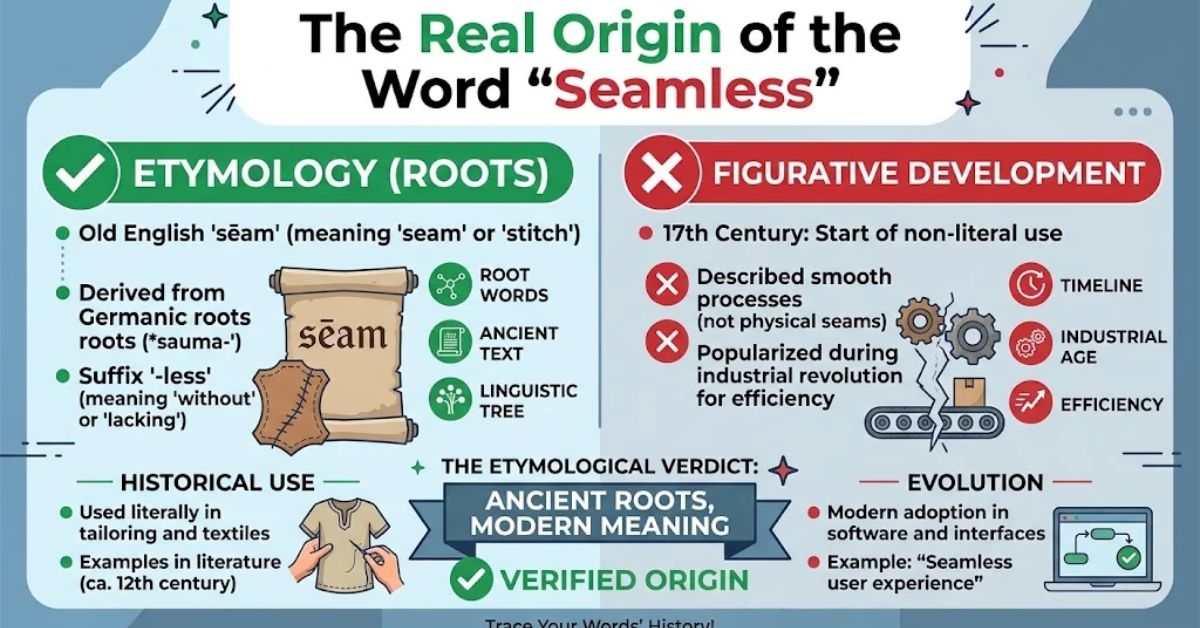
The word seamless combines two parts:
- Seam = A stitched line joining pieces of fabric.
- -less = Without.
Therefore, seamless literally means without seams.
Memory Trick
Remember this simple phrase:
No seams = seamless.
Connecting the word to clothing and stitching makes the correct spelling easier to remember.
Seamless vs. Seemless Pronunciation
Both spellings are commonly pronounced almost identically.
| Word | Pronunciation | Status |
|---|---|---|
| Seamless | SEE-mless | Correct |
| Seemless | SEE-mless | Incorrect |
This confusion is similar to other English word pairs:
| Word Pair | Difference |
|---|---|
| Their vs. There | Possession vs. location |
| Affect vs. Effect | Verb vs. noun |
| Stationary vs. Stationery | Not moving vs. writing supplies |
| Brake vs. Break | Stopping vs. damaging |
How Seamless Is Used in Business English
Businesses frequently use seamless to describe services, products, and processes that work smoothly.
Common expressions include:
- Seamless workflow
- Seamless onboarding
- Seamless communication
- Seamless payment processing
- Seamless collaboration
- Seamless integration
Example: The software allows seamless collaboration between remote teams.
The sentence suggests that employees can work together without unnecessary interruptions.
Seamless in Technology
Technology companies often use seamless to describe connected systems and applications.
When different devices or software programs work together without problems, their integration may be described as seamless.
Examples in Technology
| Phrase | Meaning |
|---|---|
| Seamless integration | Systems connect smoothly |
| Seamless synchronization | Data updates across devices |
| Seamless login experience | Easy account access |
| Seamless streaming | Streaming without interruptions |
Example: The latest update created a seamless connection between mobile and desktop devices.
Seamless in Customer Experience
Customer experience describes how people interact with a business, its products, and its services.
Companies use seamless to explain how they make these interactions easier and more convenient.
Common examples include:
- Online shopping
- Mobile banking
- Airline booking
- Food delivery applications
- Streaming platforms
- Customer support
Example: A customer orders food, makes a payment, and tracks delivery without facing technical problems. This creates a seamless experience.
Why Seamless Became a Popular Marketing Word
Businesses use seamless because it communicates convenience, efficiency, and simplicity.
Customers generally prefer services that save time and reduce unnecessary steps.
However, using seamless too frequently can make marketing content repetitive.
Weak example: We provide seamless solutions for seamless communication and seamless customer engagement.
Better example: We provide streamlined solutions that improve communication and customer engagement.
Specific wording makes marketing messages more natural and convincing.
Read More: Holliday vs Holiday: Which Spelling Is Correct in English?
Better Alternatives to Seamless
Sometimes, another word communicates your meaning more clearly.
| Alternative | Best Use Case |
|---|---|
| Smooth | General transitions |
| Effortless | Easy experiences |
| Continuous | Ongoing processes |
| Unified | Connected systems |
| Integrated | Technology systems |
| Streamlined | Efficient workflows |
| Frictionless | Customer experiences |
Example comparison:
Weak: The app creates a seamless process.
Better: The app creates a streamlined checkout process.
Correct Usage Examples of Seamless
Here are some simple examples showing how to use seamless correctly.
Business Examples
- The merger created a seamless transition between departments.
- Our platform offers seamless communication tools.
- The company designed a seamless onboarding process.
Technology Examples
- Users enjoy seamless device synchronization.
- The update provides seamless cloud integration.
- Seamless streaming improves customer satisfaction.
Everyday Examples
- The dancers performed with seamless coordination.
- Her presentation had a seamless flow.
- The travel arrangements felt completely seamless.
Incorrect Usage Examples of Seemless
Seemless is not the correct spelling in standard English.
Incorrect Sentences
- The website offers a seemless experience.
- We need seemless integration between systems.
- Their seemless communication impressed clients.
Corrected Versions
- The website offers a seamless experience.
- We need seamless integration between systems.
- Their seamless communication impressed clients.
How Spell Checkers Handle “Seemless”
Most modern spelling tools can identify seemless as a spelling mistake.
Popular Tools That Detect the Error
| Tool | Detects “Seemless”? |
|---|---|
| Grammarly | Usually |
| Microsoft Word | Yes |
| Google Docs | Yes |
| Hemingway Editor | Often |
| Browser spell check | Usually |
Why Human Proofreading Still Matters
Although spelling tools are helpful, they cannot replace careful proofreading.
They may miss awkward sentences, repeated words, and contextual problems. Reading your work before publishing helps improve accuracy and readability.
Why English Learners Struggle With Words Like Seamless
English spelling contains many unusual patterns. Some words sound alike but have different spellings and meanings.
This can make writing challenging for beginners and advanced learners.
Similar Confusing Words
| Incorrect | Correct |
|---|---|
| Seemless | Seamless |
| Alot | A lot |
| Definately | Definitely |
| Recieve | Receive |
| Writting | Writing |
These mistakes often happen when people rely on pronunciation instead of remembering the correct spelling.
The Psychology Behind Spelling Errors
Our brains often recognize familiar sounds and word patterns faster than individual letters.
Because seem is already an English word, seemless may look reasonable at first glance. However, its spelling does not match the actual word origin.
Understanding the root word helps prevent this mistake.
Why Correct Spelling Matters in Professional Writing
Correct spelling makes your writing easier to understand and helps create a positive impression.
A spelling mistake in a resume, website headline, business email, or marketing message can make your work appear less polished.
Spelling Affects First Impressions
Consider these two examples:
Business A: We provide seamless customer support.
Business B: We provide seemless customer support.
Business A uses the correct spelling and appears more professional.
Small spelling details can influence how readers perceive your communication.
How to Remember the Correct Spelling Forever
Use these simple techniques to remember seamless.
Connect the Word to “Seam”
Remember that seamless comes from seam, which means a stitched line joining fabric.
Visual Association Trick
Imagine a shirt without visible stitching.
This picture connects the meaning with the correct spelling.
Quick Reminder Formula
| Word Part | Meaning |
|---|---|
| Seam | Stitch line |
| Less | Without |
| Seamless | Without seams |
Common Contexts Where You Should Use “Seamless”
Use seamless when describing something that works smoothly or connects without noticeable problems.
Appropriate Uses
- Technology
- Customer service
- Business operations
- Website design
- Communication systems
- User experience
Example Situations
| Situation | Correct Phrase |
|---|---|
| App connection | Seamless integration |
| Team coordination | Seamless collaboration |
| Website navigation | Seamless user experience |
| Department transfer | Seamless transition |
When You Should Avoid Using “Seamless”
Although seamless is useful, repeating it too often can weaken your writing.
Avoid Repetition
Using the same adjective several times makes sentences sound unnatural.
Weak example: We provide seamless tools for seamless collaboration and seamless communication.
Better version: We provide streamlined tools that improve communication and simplify collaboration.
Choosing specific words makes your content clearer and more engaging.
Case Study: How One Word Changes Brand Perception
Imagine two landing pages promoting project management software.
Landing Page A
“Our software delivers a seemless workflow experience.”
Landing Page B
“Our software creates a seamless workflow across every department.”
Landing Page B uses the correct spelling and communicates its message more professionally.
This example shows why proofreading and spelling accuracy matter in business communication.
FAQs
Is Seemless ever correct in English?
No. Seemless is considered a misspelling in standard English. Seamless is the correct spelling and should be used in professional and everyday writing.
Why do people confuse Seamless vs. Seemless so often?
People confuse these words because they sound almost identical. The word seem is also familiar, which makes seemless look like a possible spelling.
What does Seamless actually mean?
Seamless means smooth, continuous, connected, or without interruptions. It can describe clothing, technology, business processes, and customer experiences.
Can spelling mistakes affect professional credibility?
Yes. Spelling mistakes in emails, resumes, websites, and business documents can make writing appear less professional and reduce readers’ confidence.
What is the easiest way to remember the correct spelling?
Connect seamless with the word seam. Something without seams is seamless. This simple memory trick helps you remember the correct spelling.
Conclusion
So, when it comes to seamless vs. seemless, the winner is clear: seamless is the only correct spelling. Seemless slips in because it sounds the same and borrows from the familiar word “seem,” but the real root is “seam,” the stitched line that joins fabric.
Whether you’re drafting a business message, updating a website, or chatting online, just remember: no seams, seamless. Pair that quick, simple trick with a final proofread, and your emails, resumes, and web content will look polished and professional every time. Small details build big trust, so keep this one handy and write with total confidence.

Finn Bradley is a grammar and language writer at Megazine Tech, focused on making English easier to understand. He researches grammar rules, vocabulary, sentence usage, punctuation, and common writing questions. Through clear explanations and practical examples, Finn helps readers build stronger communication skills and write with greater confidence in everyday situations.